




SHOPPING CART(0)
Your cart is empty.
shop now
Your cart is empty.
shop now
A lithium battery loses power in cold weather because cold slows ion movement in the cells and raises internal resistance. Your battery gives less usable energy and weaker current for engine starting. This matters when a cold engine needs strong current, which is what cold cranking amps measure. The CCA rating shapes cold weather starting expectations.
Inside every lithium battery, charged particles called ions carry current between the electrodes. The electrolyte is the liquid path these ions travel. Cold makes that electrolyte thicker, much like chilled honey pours slower than warm honey. Thick electrolyte slows ion movement, so fewer ions reach the electrode surface on demand. Ion mobility describes how easily ions move through the electrolyte. You turn the key, and the battery cannot deliver its full current burst. This effect explains much of the capacity loss you notice in cold weather.
Internal resistance rises as temperature falls. Resistance is the internal friction that opposes current flow. Higher resistance causes voltage sag under load. A battery that rests at a healthy voltage can still drop below the minimum your starter needs during a hard crank. Cold cranking performance drops sharply below 14°F (-10°C). The CCA rating captures that drop. The chemistry still works at that point, but the voltage sag grows severe in cold temperatures. You may hear this sag described as a weak crank or a slow turn-over.
Battery capacity describes the total energy a battery can store and release. Freezing reduces usable battery capacity for every common chemistry. Lead-acid loses about 20% of its capacity near freezing and up to 50% in extreme cold. Lithium shows similar usable-capacity loss in cold temperatures. Many riders expect a modern lithium battery to ignore winter entirely. A pack rated for a given amp-hour figure does not deliver that full figure at freezing.
Capacity loss does not mean the battery is damaged. The energy remains locked inside the cells. Warm the battery, and the ions move freely again. Usable capacity returns. This reversibility separates temporary capacity loss from permanent capacity loss. Repeated deep capacity loss from chronic undercharging can shorten life, so keep the battery charged through the off-season. Cold weather makes that charging routine more important. Store the pack indoors when you can, and top it off before the season starts.
Each chemistry fits a different role. Lead-acid remains a proven, low-cost choice for many vehicles. Lithium packs shine where weight savings and long cycle life matter. Both suffer capacity loss in cold weather, and both recover once temperatures climb. Understanding this shared limit helps you set realistic expectations for cold-weather performance. A little patience on a frosty morning pays off.
Cold cranking amps explained in one line: CCA is the current a battery can deliver at 0°F for 30 seconds while staying above a minimum voltage. That test defines the cold cranking amps meaning you see on every battery label. You now know what is cca in battery terms — a measure of punch in the cold.
Engineers chill the battery to 0°F. They draw a heavy load for 30 seconds. The battery must hold at least 7.2 volts for a 12-volt pack. The cca rating comes from that test. A higher number means stronger cold weather starting power. Vehicle makers specify a minimum CCA for each model. A smaller number may crank a warm engine fine. It may fail on a frosty morning. That is the cca battery meaning in practice: a promise about cold starts, not warm ones.
The cca, ca, and mca labels look alike. They are not. CA means cranking amperage at 32°F. MCA means marine cranking amps, also at 32°F. Both tests run warmer than the CCA test. A battery scores higher on CA and MCA than on CCA. So a 500 CCA pack may show 625 CA. Do not compare the two numbers directly. CCA is a lead-acid-based standard. Lithium packs rarely carry it in standard form.
Temperature compounds the challenge. The colder it gets, the less of its rated cca any battery can deliver. At 0°F you get the label figure. Below that, expect reduced cca. This is why cold weather starting demands margin. If you wonder what does cca mean on a battery in real terms, think of it as the floor, not the ceiling. Ask what does the cca mean on a battery when temperatures plunge below zero — the answer is a smaller usable share of that rating. Check the cca rating against your vehicle's spec. A cold snap will test the battery's ability to start an engine, and the label tells you the target. Match the cca rating to your climate, and leave room for cold weather.
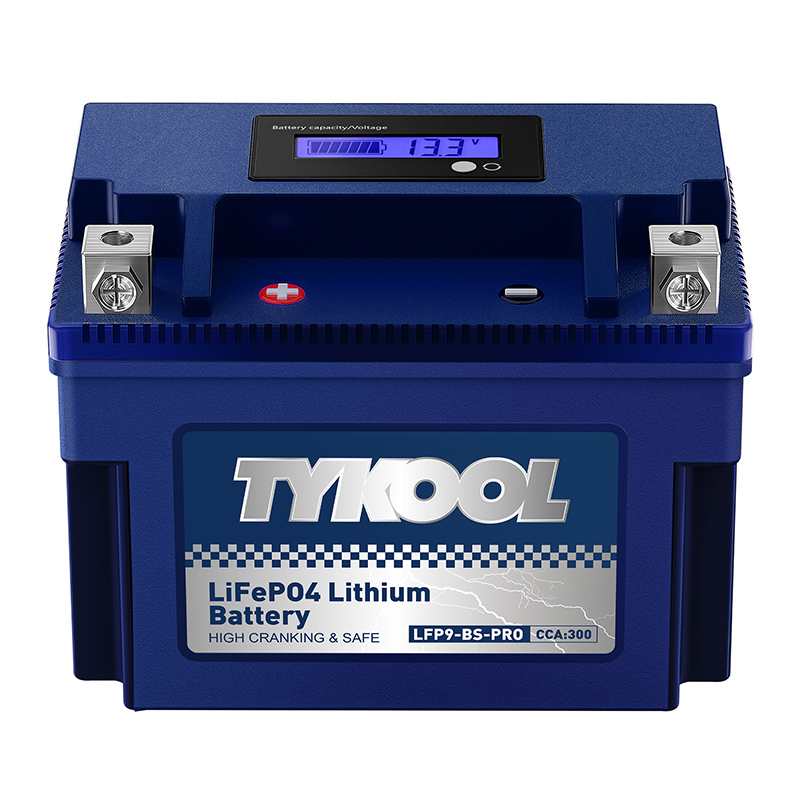
A lithium battery pack seldom has a standard CCA number. Most makers give a pulse cranking amp figure instead. That figure comes from a different test. So you cannot compare it directly to a CCA rating on a lead-acid label. Check the stated pulse figure against your vehicle's minimum requirement. A LiFePO4 battery for snowmobile use, for example, may list cranking amps at a warmer temperature than the 0°F CCA test.
LiFePO4 chemistry works well with a built-in battery management system. The BMS protects against overcharge, over-discharge, and overcurrent. Cell balancing keeps the cells even, which helps cold-weather starting reliability. A pack like the YTX14AHL-BS LFP Battery shows how these features fit together in a compact case. Lithium packs stay lighter and last longer than lead-acid. Lead-acid still sets the baseline for standardized CCA labeling. Each type fits a different job.
Read the label before you start your car in cold weather. Confirm the cranking figure and the chemistry. Then test the battery cold, before you assume cold-weather battery failure. A load test at low temperature shows real cranking strength. Weak cold starts often come from a low charge, not a dead pack. Charge the battery fully and retest.
Replace the battery when cold starts fail again and again. Repeated failure points to capacity loss you cannot recover. Match the battery type to your climate and your engine. Plan for cold weather starting with a margin above the minimum. That habit protects engine starting all winter.
Cold weather slows lithium chemistry and raises internal resistance, so your battery delivers less power. Cold weather cuts usable capacity too. CCA is a lead-acid standard, and lithium packs rarely carry it. Check your battery's ratings and test it in low temperatures before replacing it. Match the type to your climate. Cold weather rewards preparation.