




SHOPPING CART(0)
Your cart is empty.
shop now
Your cart is empty.
shop now
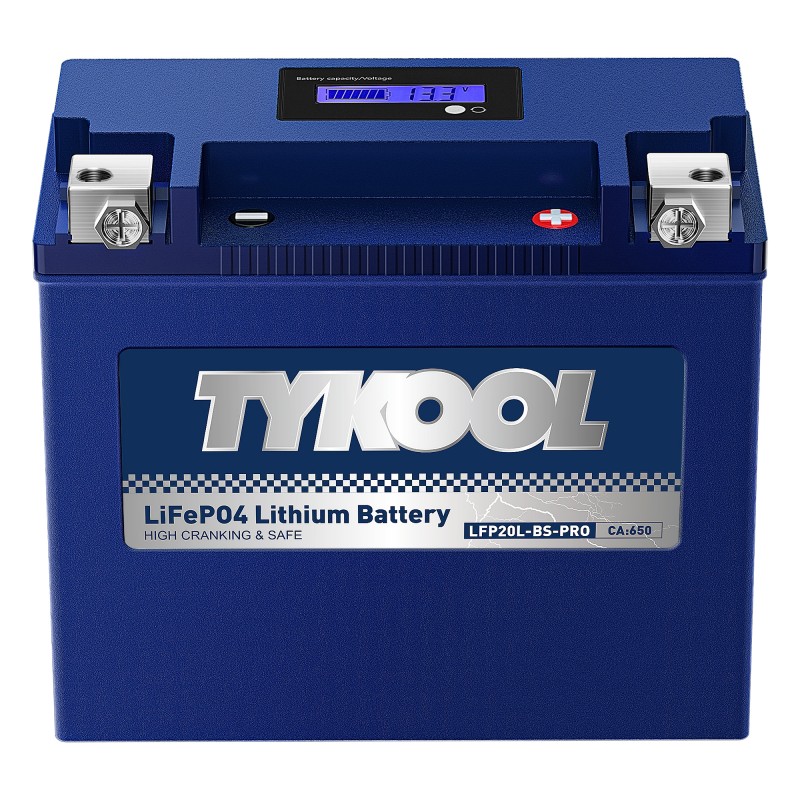
Old shunt rectifiers can cause big problems with a lithium battery. You could experience BMS overvoltage cut-off or load dump damage. The TYKOOL YTX20L-BS-PRO lithium battery offers superior BMS protection. It's important to be aware of these risks to keep your powersports vehicle safe.
Many old motorcycles, ATVs, and UTVs use shunt rectifiers. These devices help control how much voltage goes to your battery. When the battery gets close to 14.6 volts, the rectifier uses switches to send extra voltage away. This stops the battery from getting too much charge. The extra energy turns into heat. Most systems keep voltage between 14 and 15 volts. For example, a BMW R1200 uses a shunt-type rectifier. This keeps the voltage steady and protects the electrical parts.
Let’s see how charging is different for each battery type:
|
Aspect |
Lithium Batteries |
Lead-Acid Batteries |
|---|---|---|
|
Voltage Requirements |
Work between 2.5V (empty) and 3.65V (full); 14.5V might not charge enough, 14.7V can be hard on parts |
Stay at 13.2-13.5V to stop losing charge |
|
Charging Modes |
No need for float charge; finish charging fast (30-60 mins) |
Needs more time to charge because of slow chemical changes |
|
Temperature Impact |
Gets more resistance in cold; higher voltage helps |
Lower voltage above 25°C to stop gas and water loss |
A lithium battery for UTV needs careful voltage control. Lithium batteries do not need a float charge. They can finish charging much faster than lead-acid batteries.
Old shunt rectifiers do not control voltage as well. You might see higher voltage spikes when you rev the engine. Bad rectifiers can let voltage get too high. This is dangerous for a lithium battery. The BMS will act to protect the cells. Some batteries like the TYKOOL YTX20L-BS-PRO have BMS systems that cut off charging fast if voltage is too high. Using an old rectifier can cause sudden power loss or damage to your battery and electronics. Always check your charging system before you put in a new lithium battery.
If you use an old shunt rectifier, your battery can get sudden voltage spikes. These spikes happen because the rectifier sometimes uses a dead-short way to control voltage. This makes the stator work harder and get hotter. You may see these problems more when you rev the engine or switch loads. Here are some reasons why voltage spikes happen in old systems:
The rectifier shorts the stator input legs, causing a fast voltage jump.
The stator windings get hot from high braking torque.
Switching loads can make voltage go even higher than with new regulators.
If you have a lithium battery, these spikes can make the Battery Management System (BMS) stop charging. The BMS works fast to keep the battery cells safe. When the BMS sees voltage that is too high, it disconnects the battery from charging. This keeps your battery safe, but your vehicle might lose power without warning.
A load dump happens when the battery suddenly leaves the charging system. This can happen if the BMS cuts off the battery because of high voltage. When this happens, the alternator or stator still makes power, but there is nowhere for it to go. The voltage in the system can spike even higher. This sudden change can hurt sensitive electronics in your vehicle.
In a lithium battery system, load dump events are riskier than in old lead-acid setups. The BMS in a lithium battery acts fast, so the disconnect happens almost right away. Your lights, dashboard, and other electronics can get hit with a power surge. This can cause costly repairs or leave you stuck.
Tip: If your lights flicker or your vehicle loses power, check your charging system and rectifier soon.
Voltage spikes and load dump events can cause many kinds of electrical damage in your vehicle. You might notice:
Sudden power loss while riding or driving.
Headlights or other lights burning out fast.
Electronic control units (ECUs) failing or acting odd.
Fuses blowing for no clear reason.
Battery warning lights turning on and off.
These signs often mean there is a problem with your charging system or rectifier. If you use a lithium battery, you should watch for these warning signs. Keeping your battery and electronics safe starts with making sure your rectifier works well and your charging system stays at safe voltage levels.
You can find rectifier problems if you watch for signs. If your lights flicker, your battery warning light comes on, or you lose power, your charging system might have a problem. Sometimes, fuses blow or electronics act weird. These things often mean your rectifier is not working right. Check your system before you put in a lithium battery.
Test your rectifier by checking voltage at different engine speeds. First, check the resting voltage to see how charged your battery is. Next, check the voltage while the engine runs. This shows if your system charges the battery right. If you see voltage spikes or high readings, your rectifier might need fixing. Doing regular checks keeps your battery and electronics safe.
Tip: Always use a digital voltmeter to get the best results.
Switching to a MOSFET rectifier gives better protection and works more reliably. MOSFET rectifiers react fast and handle high voltage better than old shunt types. See the table below for their good points:
|
Advantage |
Description |
|---|---|
|
Faster Response |
MOSFETs protect against overcurrent and short circuits right away. |
|
Higher Reliability |
Their solid-state design lasts longer and does not wear out fast. |
|
Compact and Energy-Efficient |
They are smaller and make less heat, which is good for powersports. |
|
Seamless Integration |
MOSFETs work well with microcontrollers for better control. |
|
Quieter Operation |
They switch quietly, so they do not make noise. |
Check if your system matches before you put in a lithium battery like the TYKOOL YTX20L-BS-PRO or YTX30L-BS LFP Battery. Make sure cables, busbars, and fuses are the right size and length. Experts say you should keep current even, watch the BMS, and charge the battery the right way. Do not mix parts from different brands unless you know they work together.
You keep your vehicle safe when you change old shunt rectifiers. Picking batteries with strong BMS protection helps a lot. If you check your system often and upgrade parts, you can stop sudden power loss. This also saves you from expensive fixes. Look at these benefits:
|
Benefit |
Description |
|---|---|
|
Enhanced Safety |
BMS prevents electrical damage |
|
Longer Lifespan |
More cycles, less replacement |
Ask a professional to help you upgrade safely.
You could get sudden voltage spikes. The battery’s BMS might stop charging to keep the cells safe. Your electronics could break.
Look for lights that flicker, fuses that blow, or strange power loss. Use a digital voltmeter to check voltage at different engine speeds.
Tip: Always switch to a modern rectifier for safer lithium battery use.
A load dump makes a big voltage surge in your vehicle. Sensitive electronics and lights can stop working. You might have to pay a lot for repairs.