




SHOPPING CART(0)
Your cart is empty.
shop now
Your cart is empty.
shop now
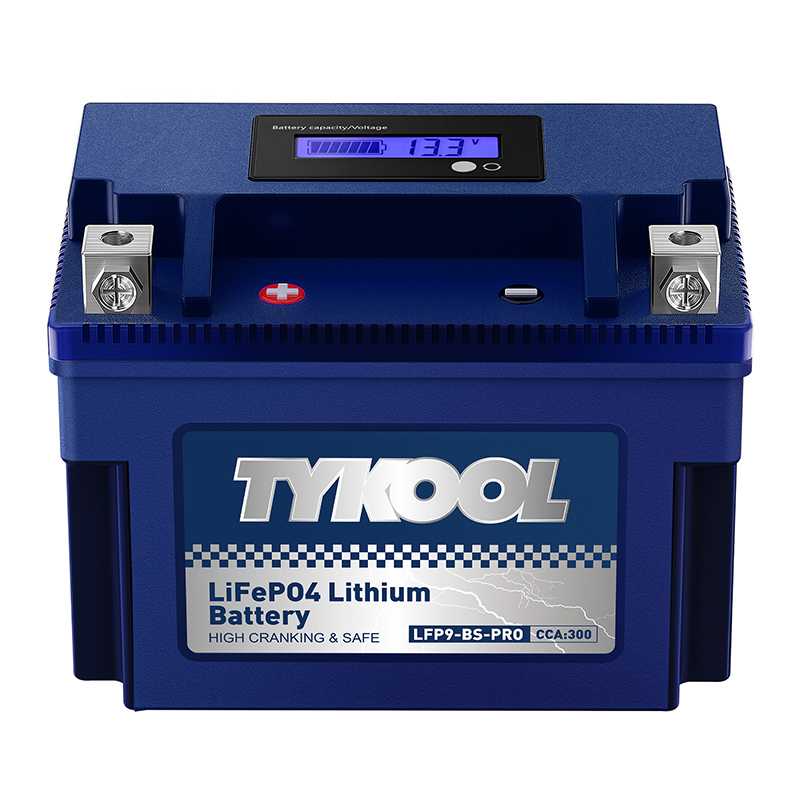
You see two 12V lithium batteries for powersports on a shelf. One cranks a cold engine easily. The other struggles. Voltage stays the same. Starting power changes because of internal resistance, cell chemistry, cell setup, and BMS design. Cold Cranking Amps (CCA) measures current at 0°F for 30 seconds. Peak amps show the maximum burst. This article explains each engineering factor behind that difference.
Internal resistance controls how much current your battery can give in an instant. Think of it as a narrow pipe inside the battery. A thinner pipe blocks flow. A thicker pipe lets more flow. The same idea works for electric current. Lower internal resistance means more burst current gets to your starter motor. This is why two Lithium Batteries for Powersports with the same voltage can act very differently when you hit the start button. Makers design internal resistance using cell chemistry, electrode design, and build quality. You cannot see this number on the label. But it affects every start you make.
Every battery has internal resistance measured in milliohms. This resistance fights against current flow inside the battery. When you crank your engine, you need hundreds of amps in a quick moment. Internal resistance acts like a gate. It limits how much current can leave the battery at once. A battery with 3 milliohms of internal resistance gives much more starting current than one with 10 milliohms. Lithium iron phosphate cells in powersports batteries usually have very low internal resistance. They can discharge at rates of 60 to 80 times their capacity. This trait gives them their strong starting punch. But not all lithium batteries have the same internal resistance. Cell quality, manufacturing differences, and age all cause changes. A top lithium battery keeps lower resistance over its life. This steadiness gives reliable starts year after year. The build of the cells also matters. Thicker electrode coatings and better current collectors lower resistance. These design choices separate high-performance starting batteries from regular energy storage models.
Voltage sag comes directly from internal resistance. As current moves through the battery's internal resistance, voltage drops based on Ohm's law. Your battery might show 13.2 volts when not in use. Under cranking load, that voltage can fall to 10 volts or less. The starter motor needs voltage to make torque. Less voltage means less torque. Less torque means slower cranking. Slower cranking makes starting harder, especially in cold weather. Lithium batteries for powersports handle voltage sag better than lead-acid ones. Their lower internal resistance causes less sag for the same current draw. This benefit means your starter motor sees higher voltage during cranking. You get faster, more reliable starts. Temperature greatly affects this equation. At very low temperatures, lithium internal resistance goes up. Your battery may give power more slowly rather than in one big burst. The BMS controls this process to protect the cells while still giving enough cranking current. This slow power build is different from lead-acid behavior. Lead-acid batteries lose most of their cranking power in deep cold. Lithium keeps useful output even when temperatures go well below freezing. Knowing about voltage sag helps you pick a battery that keeps strong performance under the tough conditions of powersports use.
Internal resistance sets the base. The exact chemistry inside the cells sets the highest possible starting power. You find two main chemical groups in Lithium Batteries for Powersports.
LiFePO4 cells are steady and safe. They can put out an instant discharge of 60 to 80 times their capacity. This huge burst is just what you need to turn over a cold engine. This chemistry lets electrons flow with almost no blockage. It gives steady voltage until the cell is mostly used up. High-rate LCO or NMC cells give higher energy density. You get more capacity in a smaller size. But their burst traits fit long high drains more than a sudden surge. Under a sudden heavy load, the voltage can drop. Lithium ions cannot move fast enough from the cathode to the anode. LCO and NMC work great for power tools. LiFePO4 is better for the one huge current spike that starting engines need. This difference explains why LiFePO4 has become the main chemistry in Lithium Batteries for Powersports.
Chemistry sets the stage. The physical setup of cells inside the pack matters just as much. A standard 12V lithium battery uses a 4S layout. You wire four cells in series. Each cell adds its voltage. The total reaches 12.8 volts. But the current must flow through every cell. The internal resistances of all four cells add up. A 4S2P layout uses eight cells. Four cells make one series string. Another four make a second string. You connect these two strings in parallel. This makes two paths for the current. The effective internal resistance drops a lot. It is cut about in half. Lower internal resistance means less voltage sag under the cranking load. You get higher capacity and higher peak current. Each string shares the load. If the engine asks for 200 amps, each string gives only 100 amps. This sharing keeps voltage higher. It gives more power to the starter motor.
Manufacturers design the cell layout of Lithium Batteries for Powersports to match specific engine demands. A large V-twin engine gains a lot from 4S2P. A small single-cylinder engine may work just fine with a standard 4S battery. Cell count and parallel strings directly shape peak current. Think about a personal watercraft. You need to crank a high-compression engine while fighting engine heat. This requires very low voltage sag. This design point makes high-quality Lithium Jet Ski Batteries a smart upgrade. The 4S2P layout gives the stability these demanding uses need.
The BMS acts as a gatekeeper. It sets a hard limit on current flow. Even with high-capacity cells, a low-rated BMS caps the flow. This rating controls your starting power. Manufacturers match the BMS to the engine size. A small scooter battery uses a lower-rated BMS. A large ATV battery needs a higher-rated BMS. Check the CCA and peak amp specs to know this limit. The BMS also prevents overcharging and over-discharging. It monitors overcurrent events. Cell equalization keeps each cell at the same voltage. These protections define the battery's boundaries.
Cold weather raises internal resistance. Your battery must work harder to push current. The BMS gradually builds power. This protects the cells while giving reliable starts. Lithium outperforms lead-acid in cold. Most lead-acid lose half their CCA at freezing. Lithium retains much more capacity.
Lithium batteries have low self-discharge rates. A charged battery sits for months and retains power. No tender needed off-season. The same benefit applies to lithium batteries for lawn mowers stored over winter.
Consider a case study. Two 12V Lithium Batteries for Powersports sit on the shelf. One offers 240 CCA. The other offers 400 CCA. Both power the same 600cc engine on a cold morning. The low-CCA turns slowly. The high-CCA cranks quickly. The high-CCA model uses a BMS with a higher discharge ceiling. It may use a 4S2P layout that shares current. The low-CCA model uses a lower-rated BMS and standard 4S. Both are 12 volts. Internal engineering makes the real difference.
Starting power comes from engineering, not just voltage. Internal resistance, chemistry, cell layout, and BMS ratings all shape CCA and peak amps. Manufacturers build Lithium Batteries for Powersports around specific engine demands. Two 12V batteries can differ for real reasons. Match CCA and peak current to your vehicle's real starting needs, not voltage.